

Industry Background

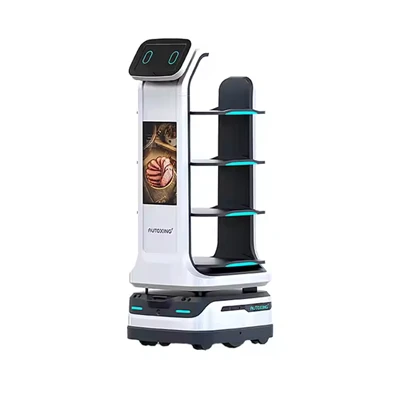
Food plazas with multiple independent merchants commonly share one fleet of food delivery robots to carry meals from stalls to diners. In real operation, food preparation time varies greatly for every vendor, and merchants cannot predict when dishes will be finished. If robots cruise around waiting passively, they often arrive too early and idle at food pickup stations, which makes hot food turn cold. In other cases, merchants finish packaging meals but cannot call a robot immediately when all robots are busy delivering other orders. Without separated task triggers for each stall, multiple merchants compete for robot resources at the same time, resulting in messy task stacks, lost orders and untraceable order sources. To standardize pickup scheduling and trigger delivery requests only when meals are ready, the robot call button for food stall is designed to connect with the robot management platform and build an orderly on-demand robot dispatch workflow.
Product Integration Principle

Each independent merchant is equipped with a dedicated food pickup station fitted with a separate wireless call button. Every button is bound to a unique merchant ID and fixed pickup coordinate. Once the merchant finishes cooking and packing food, they tap the local wireless call button. A wireless trigger signal is transmitted to the robot task scheduler platform. The platform checks the real-time working status of all delivery robots and identifies idle robots. It sends out a dispatch command to direct one available robot to the corresponding pickup station.
When all robots are occupied with active deliveries, the incoming pickup request will not be discarded. Instead, the task is stored in an independent queue belonging to this merchant for food court order queuing. After a robot finishes its current delivery and becomes free, the system automatically picks the earliest pending task from the queue and dispatches the robot to that pickup station. The robot arrives and parks at the counter, waiting for the merchant to assign a target location pager ID before starting the delivery journey. The robot call button for food stall only sends pickup requests to summon robots. It does not support customer-side positioning or location tracking, serving as core catering automation hardware for back-of-house automation.

Core Advantages of Integration
This integration delivers reliable, flexible automation for open catering venues.
Flexible Seating
On-demand robot dispatch to eliminate useless robot cruising. Robots are dispatched only after merchants tap the button with ready meals. Battery consumption is reduced, realizing obvious robot idle reduction, and effective service time is extended.
Low Renovation
Isolated task queues for fair resource allocation. The nine call buttons work independently with separated waiting lists. Requests from one merchant will not seize the task priority of another stall, making autonomous delivery robot fleet management stable and fair during rush hour order handling.
Accurate Delivery
Simple operation suitable for kitchen staff. It only requires one tap, without complicated tablets or scheduling software training. Back-of-house workers can trigger requests quickly even during peak cooking hours, the core value of kitchen robot calling system.
Shared Fleet
Built-in queuing buffer prevents order loss. New pickup requests are cached automatically when robots are fully occupied. Tasks will be executed sequentially once robot capacity is released via reliable food delivery scheduling system.
Better Experience
Traceable records for data analysis. The platform logs every button trigger timestamp, merchant source, waiting time and robot response latency. Operators can analyze order volume, average waiting duration and robot utilization rate to adjust fleet size and service arrangement, achieving restaurant labor optimization.
Data Insight
Aligned with kitchen workflow and preserves food quality. Merchants control the timing of robot summoning. Meals will not sit and cool down while waiting for robots, lowering food waste and improving dining quality for the whole multi-merchant catering system.

Industry Pain Points Addressed
This targeted linkage solves typical operational obstacles in multi-merchant food courts.
Resource Conflict
When multiple merchants share one robot fleet, there is no independent summon entry, resulting in chaotic robot scheduling and resource competition among stalls. The linkage of call button and autonomous food delivery robot standardizes task queues and allocates robot resources by summon sequence to eliminate resource conflicts.
Food Cooling
Robots may arrive ahead of schedule and idle at pickup counters, leaving hot food to cool down, hurting customer experience and raising food waste risk. This solution allows merchants to summon robots only after meals are ready, preventing long waiting and preserving food temperature.
Complex Operation
Kitchen staff must operate complicated scheduling terminals to release orders, bringing high learning costs and slowing down food output during peak hours. The linkage only requires one tap to trigger tasks, featuring simple operation and no disruption to kitchen workflow.
Order Loss
When all robots are busy during dining rush hours, new pickup requests cannot be submitted and tasks get lost, forcing merchants to deliver meals manually. Built-in queuing buffer stores pending requests automatically, and robots will take over tasks once available to avoid order loss.
Poor Traceability
Order sources cannot be clearly identified. It is hard to confirm order ownership and call timestamps for traceability once delivery disputes arise. Each wireless call button is bound to unique merchant ID, recording trigger time and task status for full traceability.
High Power Drain
Robots keep roaming on standby with plenty of unnecessary movement, draining battery quickly and requiring frequent recharging, which cuts valid service time. The on-demand summon mode stops blind cruising, reduces useless power consumption and extends the working duration of the autonomous delivery robot fleet.
The linkage of pickup station call button and autonomous food delivery robot builds an on-demand scheduling system for multi-merchant food courts. With one-tap operation matching kitchen workflow and separated task queues for fair resource allocation, it prevents robot idle cruising and food cooling while enabling full order traceability. The solution stabilizes peak delivery, fills scheduling gaps of shared robot fleets with low-cost hardware, and supports smooth deployment of catering automation.