

Industry Background
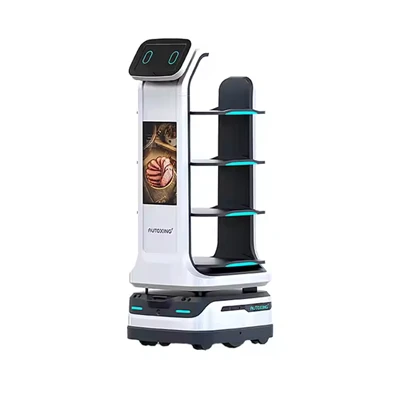
Autonomous food delivery robots have been widely adopted in modern catering businesses to cut labor expenses and boost service efficiency, especially in food court automation, shared food plazas and multi-stall dining zones. Most conventional delivery robots work with pre-configured table IDs or static QR codes fixed on tables. This setup works well in standard restaurants with fixed seating layout, yet it meets huge limitations in open food plazas. In these venues, diners can pick seats freely or move to another table anytime, without stable fixed table numbers. When multiple merchants share one robot fleet management system, wrong deliveries and target recognition errors happen frequently. If staff have to manually guide robots for every order, the value of food service automation will be greatly weakened. To solve the pain points from highly mobile dining scenes, the wireless location pager is developed to integrate with commercial catering robots and realize intelligent dynamic target delivery toward moving targets.
Diners receive the wireless location pager and carry it to their dining spot. The device runs continuous automatic indoor real-time location system and streams real-time location data to the robot fleet management system. The platform records the unique ID and live coordinates of every indoor positioning tracker. After food is ready at the pickup counter, the merchant selects the target pager ID on the scheduling dashboard. The platform fetches the latest coordinate of this pager and sends delivery commands to an available autonomous food delivery robot.
Powered by SLAM navigation robot mapping algorithm and multi-sensor obstacle avoidance robot modules, the robot calculates the best travel route and navigates toward the pager. If the diner moves to a new seat with the pager during delivery, updated location data will be uploaded to the platform. The target coordinate refreshes automatically, and the robot adjusts its path dynamically to track the diner, until it reaches the destination and completes contactless food delivery. The wireless location pager acts purely as the coordinate source for delivery destination; it cannot send requests to call robots or trigger pickup tasks.

 Core Advantages of Integration
-
Flexible Delivery
Supports delivery to moving diners without fixed table restrictions. The robot refreshes destinations in real time when guests change seats, adapting to free seating in open food plazas.
-
Easy Deployment
Minimal renovation required. Table QR codes and extra markers are not mandatory, and the system works well even if stalls and seating layouts get adjusted frequently.
-
Accurate Matching
Every pager is assigned a unique ID for target recognition. The system separates orders clearly to stop cross-stall misdelivery and guarantee stable delivery quality.
-
Shared Scheduling
Multiple merchants can share one robot fleet safely. Orders are isolated by pager ID for unified scheduling, which cuts manual work and lowers operation costs.
Industry Pain Points Addressed
These common obstacles for robot delivery are resolved by the location pager linkage solution.
Static Target
Traditional delivery robots only support static preset points. Delivery fails and misdelivery occurs once diners change seats. The linkage of location pager and autonomous food delivery robot tracks diners' real-time location continuously and completes delivery even if diners move, fixing this pain point.
01
Scene Limit
Open food courts and marketplaces have no standardized fixed table numbers, so standard table-code robot solutions cannot be deployed. The linkage of location pager and autonomous food delivery robot works without table IDs or QR codes, fitting open venues without fixed numbering and solving this problem.
02
Order Mix-up
In dense multi-stall areas with heavy orders, meals from one merchant are often mistakenly delivered to customers of another stall. The linkage of location pager and autonomous food delivery robot identifies orders via unique device IDs to avoid cross-stall misdelivery.
03
Manual Reliance
Many orders require staff to guide robots and confirm customer positions manually, greatly weakening labor-saving benefits of automation. The linkage of location pager and autonomous food delivery robot synchronizes location data automatically, removing manual guidance and cutting manpower reliance.
04
Low Efficiency
Seats turn over rapidly during peak hours. Static destinations become invalid quickly, causing repeated detours, low throughput and aisle congestion. The linkage of location pager and autonomous food delivery robot refreshes targets dynamically, reduces redundant robot movement, improves efficiency and eases aisle congestion.
05

Summary
The location pager and autonomous food delivery robot solution is tailored for open food courts without fixed table numbers and with mobile diners. It tracks users by real-time location data from the pager, breaking the limits of static table codes, preventing cross-stall misdelivery and eliminating manual guidance. It maintains stable delivery performance in peak hours, enables flexible food court automation with simple deployment, cuts operational costs for merchants and delivers free, convenient dining service.