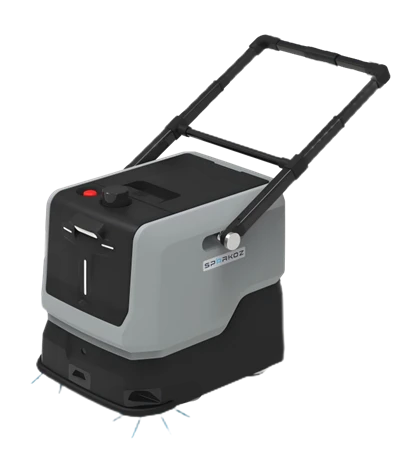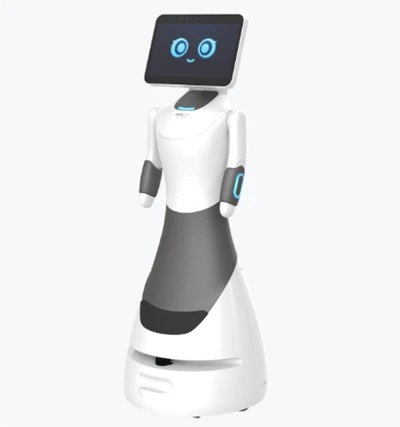


As a key support for intelligent manufacturing and supply chain upgrades, industrial logistics robots have expanded their application scope from simple material handling to the entire process of industrial production and distribution, forming a multi-dimensional operation system covering warehousing, production, distribution, and cross-system collaboration. This scope is not only reflected in the breadth of physical space but also in the deep penetration into different processes and business scenarios, becoming a core hub for the efficient operation of modern industrial logistics.
In warehousing, the application of industrial logistics robots covers the entire lifecycle of inbound, storage, picking, and outbound. High-bay racking robots can accurately load and unload pallets or boxes in automated warehouses, achieving high-density storage and rapid inbound/outbound through 3D positioning and load control; sorting robots, relying on visual recognition and robotic arm collaboration, can complete the high-speed classification of massive SKUs during peak order periods, adapting to scenarios with stringent sorting efficiency requirements, such as e-commerce and manufacturing parts warehouses; material handling robots handle material transfer between different warehouses, avoiding congestion through path optimization algorithms and ensuring the continuity of warehousing operations.
In the manufacturing process, industrial logistics robots extend to the logistics needs of the workshop and production line. AGVs (Automated Guided Vehicles) and AMRs (Autonomous Mobile Robots) can circulate between machine tools, assembly lines, and temporary storage areas, transporting raw materials, semi-finished products, and finished products, supporting precise material delivery according to production rhythm and reducing inventory backlog at the line. Collaborative robots can work with workers to load and unload heavy workpieces or transfer precision components, improving production line flexibility while ensuring operational safety. Some specialized robots can also integrate quality inspection modules, simultaneously performing initial dimensional or visual inspections during handling, achieving integrated logistics and quality control.
In off-site delivery and industrial park logistics, industrial logistics robots are breaking through traditional factory boundaries. Unmanned delivery vehicles can perform short-distance transportation tasks in industrial parks, ports, or outside large factory areas, connecting warehousing centers with external logistics nodes. Inspection robots are responsible for environmental monitoring and anomaly warnings on park roads and warehouse perimeters, ensuring smooth and safe logistics channels. Some companies have piloted drone and robot collaboration to achieve rapid allocation of small items across regions, expanding the spatial dimension of logistics coverage.
Furthermore, the scope of industrial logistics robots is also reflected in cross-system collaboration. Through deep integration with information systems such as MES (Manufacturing Execution System), WMS (Warehouse Management System), and ERP (Enterprise Resource Planning), robots can receive real-time data on production plans, inventory levels, and order demands, dynamically adjusting task priorities and routes to achieve bidirectional flow of logistics and information. This collaborative capability enables them not only to execute predetermined tasks but also to act as the "nerve endings" of the intelligent manufacturing system, driving improvements in response speed and resource allocation efficiency across the entire supply chain.
From static storage to dynamic circulation, from closed factories to open industrial parks, the application scope of industrial logistics robots continues to expand with technological iterations. With their intelligent and flexible operational characteristics, they break through the time and space limitations and process barriers of traditional logistics, providing a full-scenario solution for building an efficient, resilient, and green modern industrial logistics network.