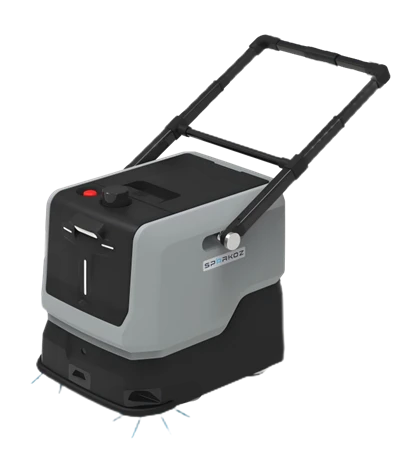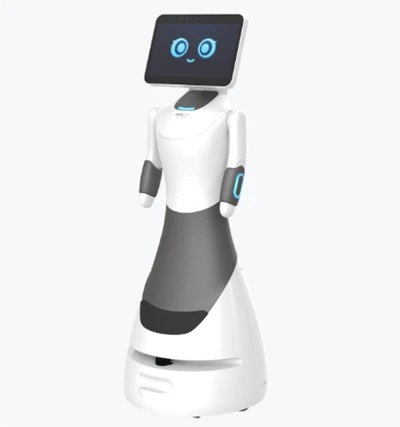


As the manufacturing industry accelerates its move towards intelligence and flexibility, industrial logistics robots, with their unique technological advantages and systematic operational capabilities, have become a key force in improving supply chain efficiency, reducing overall costs, and enhancing enterprise competitiveness. Their value lies not only in replacing human labor in completing heavy or repetitive logistics tasks, but also in breaking down data and process barriers between production, warehousing, and distribution, building an efficient, controllable, and sustainable industrial logistics system.
First, they significantly improve operational efficiency and continuity. Industrial logistics robots can perform tasks such as handling, sorting, and storage around the clock, eliminating the limitations of human labor in terms of shift changes, physical exertion, and emotional fluctuations. In warehousing, high-bay robots, relying on precise positioning and high-speed operation, achieve dense storage and rapid inbound and outbound operations, significantly shortening order response cycles; in production workshops, autonomous mobile robots can accurately deliver materials according to a set rhythm, reducing line-side waiting and work-in-process inventory buildup, and improving the stability of the overall production rhythm.
Second, they reduce operating costs and labor pressure. Faced with the challenges of structural labor shortages and continuously rising labor costs, robots, with their one-time investment and long-term stable output model, alleviate enterprises' reliance on seasonal labor. Their high operational consistency avoids material damage or delivery errors caused by human negligence, reducing rework and losses, thereby amortizing unit logistics costs over the long term.
Furthermore, they enhance operational safety and quality control. Industrial logistics robots incorporate multiple safety protection mechanisms in their design, including collision detection, area access management, and emergency stop response, effectively reducing accident risks in human-robot mixed operation environments. Simultaneously, the precision and stability of robot task execution far exceed that of humans, maintaining high standards of operational quality in scenarios such as precision assembly and fragile item handling, improving product consistency and customer satisfaction.
In addition, they achieve end-to-end data integration and intelligent decision support. Through deep integration with manufacturing execution systems, warehouse management systems, and enterprise resource planning systems, robots can collect real-time data on location, status, and task progress, forming a digital mirror of the entire logistics chain. Managers can use this data to analyze bottlenecks, optimize route planning and inventory layout, driving logistics management from experience-driven to data-driven, improving resource allocation efficiency and responsiveness. Finally, industrial logistics robots enhance enterprises' flexible production capabilities and market responsiveness. They possess the ability to quickly switch operating modes and platforms, flexibly adapting to the trend of multi-variety, small-batch production, shortening changeover time, and increasing production line reuse rates. When facing order fluctuations or sudden demands, robot swarms can rapidly reconstruct work sequences through a scheduling platform, ensuring the resilience and continuity of the supply chain.
In summary, industrial logistics robots create synergistic value in terms of efficiency improvement, cost reduction, quality assurance, safety, and decision-making empowerment, becoming an indispensable logistics hub in intelligent manufacturing systems and providing solid support for industrial enterprises to build future-oriented competitive advantages.