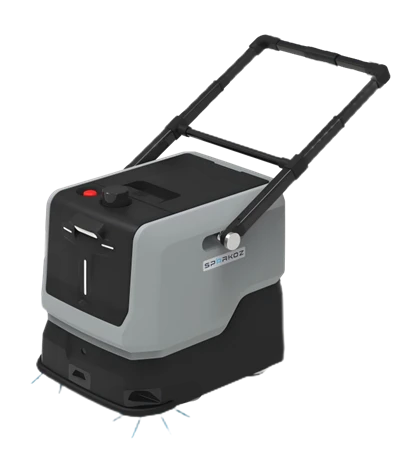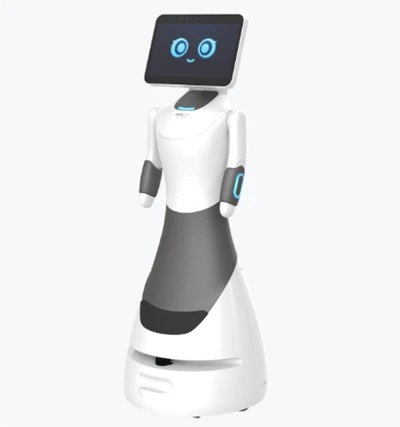


With the deep integration of artificial intelligence and the Internet of Things (IoT), commercial service robots are moving from proof-of-concept to large-scale application, becoming a core force driving the intelligent transformation of the service industry. Based on autonomous navigation, environmental perception, and human-computer interaction capabilities, they demonstrate significant value in reducing labor costs, improving service efficiency, and optimizing user experience, gradually penetrating into retail, hospitality, healthcare, government, and other fields, reconstructing the operational logic of traditional service scenarios.
In terms of functional positioning, commercial service robots focus on the dual goals of "replacing repetitive labor" and "expanding service boundaries." For example, in commercial complexes, delivery robots can autonomously transport meals and documents across floors, freeing manpower from mechanical errands; in hotel settings, reception robots use multimodal interaction to guide check-in, provide information, and respond to customer needs, shortening customer waiting time while ensuring standardized and consistent service. From a technical perspective, the fusion of LiDAR and visual SLAM in positioning solutions enables robots to achieve centimeter-level navigation accuracy. Combined with dynamic path planning algorithms, it can flexibly handle real-world environments with dense crowds and complex spaces. Meanwhile, iterations in natural language processing and affective computing technologies allow robots to engage in conversations with users that are closer to human habits, even recognizing emotional states and providing empathetic feedback.
Currently, the large-scale deployment of commercial service robots still faces challenges in scenario adaptation and cost control. Significant differences in spatial layout and service processes across different industries require robots to have stronger customization capabilities. At the same time, the precision of hardware modules and the complexity of software algorithms raise the R&D threshold, requiring collaborative efforts across the industry chain to overcome bottlenecks in the localization of core components and modular design. It is worth noting that the continued policy support for "robot+" applications and the widespread adoption of 5G and edge computing are accelerating the evolution of robots from "single-point tools" to "system nodes"-through linkage with intelligent terminals and management platforms, they can synchronize scene data in real time, feeding back into operational decisions and forming a closed-loop ecosystem of "service-data-optimization."
As a typical carrier of the integration of the digital economy and the real economy, commercial service robots not only carry the practical significance of technology implementation, but also indicate the trend of the service industry leaping from "labor-intensive" to "intelligent service". With the dual improvement of technological maturity and application depth, they are expected to become a key fulcrum for industrial upgrading in the next decade.