

The integration of advanced technologies in industrial settings has revolutionized the way factories operate. One such innovation that has gained significant traction is the use of factory delivery robots. As a supplier of these cutting - edge robots, I often get asked whether they can be effectively used in a leather - working factory. In this blog post, I will explore the feasibility, benefits, and potential challenges of deploying factory delivery robots in a leather - working environment.
Feasibility of Using Factory Delivery Robots in a Leather - Working Factory
Compatibility with Leather - Working Processes
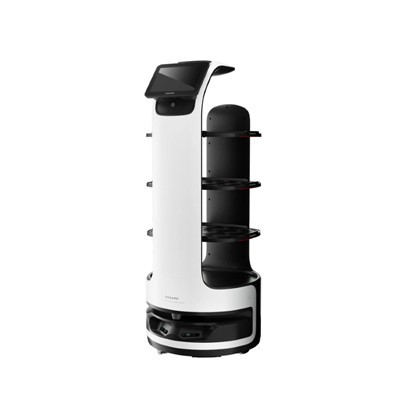
Leather - working factories typically involve multiple stages, from raw material handling to finished product packaging. Factory delivery robots, such as the Autonomous Material Transport Robot, can be programmed to handle a variety of tasks in each stage. For example, they can transport large hides of leather from storage areas to the cutting tables, which is a labor - intensive task when done manually. These robots are equipped with sensors and navigation systems that allow them to move around the factory floor safely and efficiently, avoiding obstacles and following pre - defined paths.
Adaptability to the Factory Layout
Leather - working factories may have complex layouts with different workstations, storage areas, and access points. Industrial Delivery Robot are highly adaptable and can be customized to fit the specific layout of a leather - working factory. They can operate in narrow aisles, around corners, and through different levels if necessary. Advanced mapping technologies enable them to create a digital map of the factory floor during the initial setup, and then navigate through it with ease.
Benefits of Using Factory Delivery Robots in a Leather - Working Factory
Productivity Enhancement
Time is of the essence in any manufacturing industry, and leather - working is no exception. By using factory delivery robots, the time taken to transport materials between different workstations can be significantly reduced. Workers no longer have to spend time moving materials manually, which allows them to focus on their core tasks, such as cutting, stitching, and finishing the leather products. This leads to an overall increase in productivity and output. For instance, an Industrial Smart Delivery Robot can be programmed to make multiple deliveries per hour, ensuring a smooth and continuous flow of materials in the factory.
Quality Control
Consistent and accurate material handling is crucial for maintaining the quality of leather products. Factory delivery robots are designed to handle materials gently and precisely. They can ensure that leather hides are transported without any damage or creasing, which is especially important in the production of high - end leather goods. Moreover, robots can keep track of the movement of materials, which helps in better quality control. For example, if a particular batch of leather needs to be processed in a specific sequence, the robots can ensure that it follows the correct path through the factory.
Cost Savings
In the long run, deploying factory delivery robots can result in significant cost savings. Although the initial investment in purchasing and installing the robots may be high, the savings in labor costs over time can be substantial. Additionally, robots are more reliable than human workers in terms of consistent performance, and they do not require breaks or vacations. This means that the factory can operate for longer hours without incurring additional labor costs. Agv Autonomous Mobile Robot can also reduce the risk of workplace accidents, which can lead to costly compensation claims and downtime.
Potential Challenges and Solutions
Dust and Debris
Leather - working processes generate dust and debris, which can potentially affect the performance of factory delivery robots. Components such as sensors and wheels may be clogged with dust, leading to malfunction. To address this issue, robots can be equipped with dust - resistant covers and regular cleaning mechanisms. Additionally, the factory environment can be maintained with proper ventilation and dust collection systems to minimize the amount of dust in the air.
Heavy Loads
Leather hides, especially large ones, can be heavy. Factory delivery robots need to be designed to handle these heavy loads safely. Transport Handling Robot with high - capacity lifting mechanisms can be used to transport heavy leather materials. These robots are built with robust frames and powerful motors to ensure that they can carry the necessary loads without any issues.
Integration with Existing Systems
Integrating factory delivery robots into an existing leather - working factory system can be a challenge. The robots need to communicate effectively with other equipment, such as cutting machines and stitching machines. To overcome this, modern factory delivery robots are designed to be compatible with a wide range of industrial communication protocols. They can be easily integrated with the existing factory management systems, allowing for seamless operation.
Conclusion
In conclusion, factory delivery robots can be effectively used in a leather - working factory. They offer numerous benefits in terms of productivity, quality control, and cost savings. While there are some potential challenges, such as dealing with dust and heavy loads, these can be overcome with proper design and maintenance. As a supplier of factory delivery robots, I am confident that our products can bring significant improvements to the leather - working industry.
If you are interested in exploring how our factory delivery robots can enhance your leather - working operations, I invite you to contact us for a detailed discussion. Our team of experts will be happy to help you find the best solution for your specific needs.


References
- "Industrial Robotics: Technology, Programming, and Applications" by Peter Corke
- "Automation in Manufacturing: Fundamentals and Applications" by Mikell P. Groover